There’s a gap between what people think is causing their reflux and what’s actually causing it. The obvious suspects — coffee, alcohol, spicy food — often turn out to be fine. It’s usually something a bit more overlooked. The problem is that memory is selective. Everyone remembers the dramatic episodes. The patterns that explain them tend not to stick.
That’s the main reason logging is useful. Not because it’s pleasant admin, but because it gives you something more reliable than memory to work from.
The practical challenge is that it only works if you do it. Which means logging your food soon after eating, while it’s still accurate. Logging symptoms when they happen, not later when you’re trying to reconstruct the day. Doing both consistently for long enough that patterns start to become visible — not after two days, but after a couple of weeks.
That’s what Reflux Radar is designed to support. The app isn’t doing the analysis for you; it’s making it easier to build the habit that makes analysis possible. The AI parsing means you don’t have to manually break down every meal. The daily timeline puts food and symptoms next to each other so patterns are easier to spot. But the value of the tool depends entirely on whether you use it consistently.
Once you do start seeing patterns, something changes. You begin to stop guessing. You stop blaming coffee when it turns out to be late eating. You start making decisions based on your own data rather than generic advice — and generic advice about reflux varies enough that most of it isn’t worth much anyway.
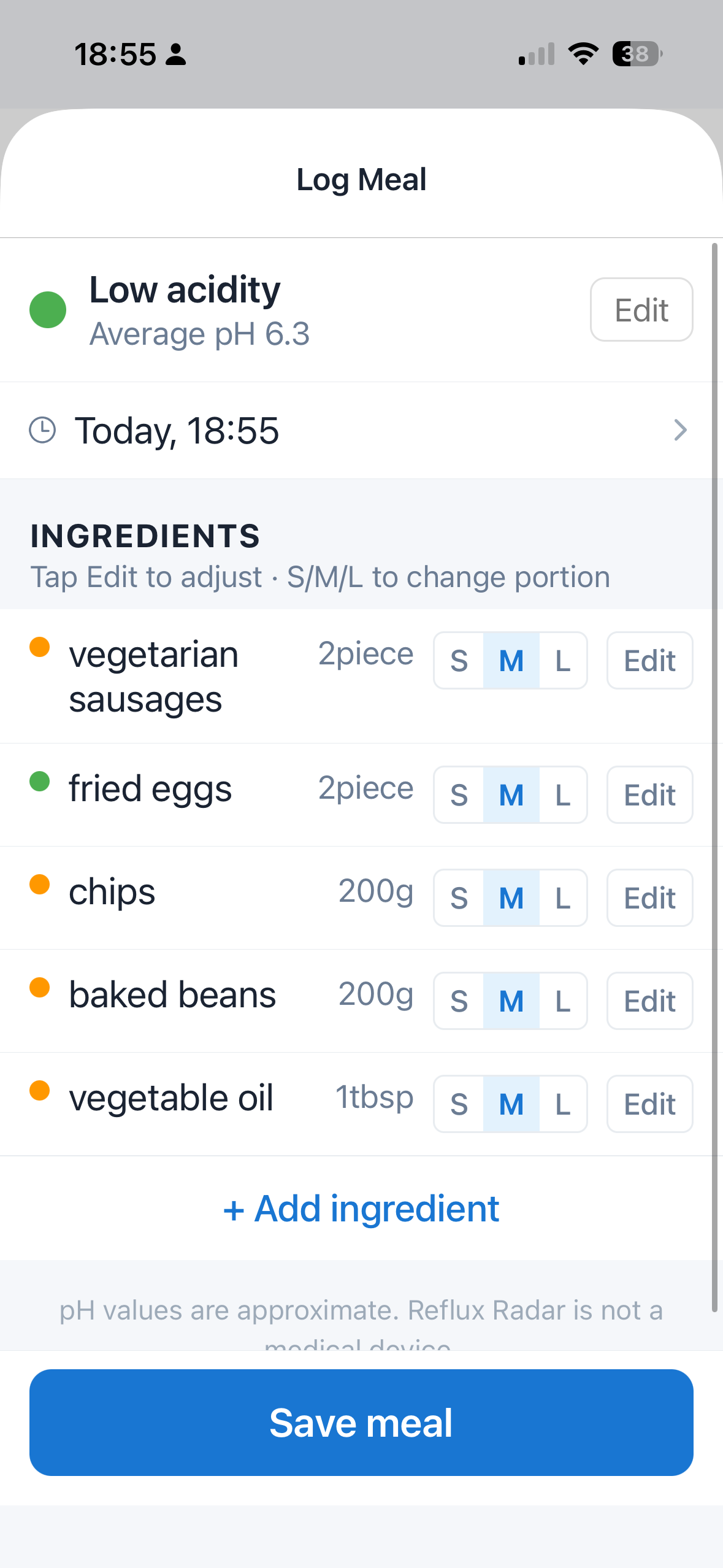
The broader point is simple: consistency is what turns a tracking app into something useful. The data only becomes meaningful when there’s enough of it, and that requires some discipline in the early stages while the habit is still forming.
It gets easier. The habit does form. And when it does, the picture starts to become clearer. As an old colleague used to say to me: what gets measured, gets managed!
 abstractlines
Leave a comment